




PCOS Diagnosis Criteria: Does Weight Gain Mean You Have PCOS?
For many women, a sudden change on the scale leads to a quick search for answers, often resulting in a self-diagnosis of Polycystic Ovary Syndrome. While the two are frequently linked, it is a common medical misconception that obesity and PCOS are the same thing. At KCJ Hospital, we believe that clarity is the first step toward wellness. Understanding the formal PCOS diagnosis criteria is essential to avoid unnecessary stress and ensure you receive the right care for your unique body.
What are the Official PCOS Diagnosis Criteria?
Understanding the PCOS Diagnosis Criteria
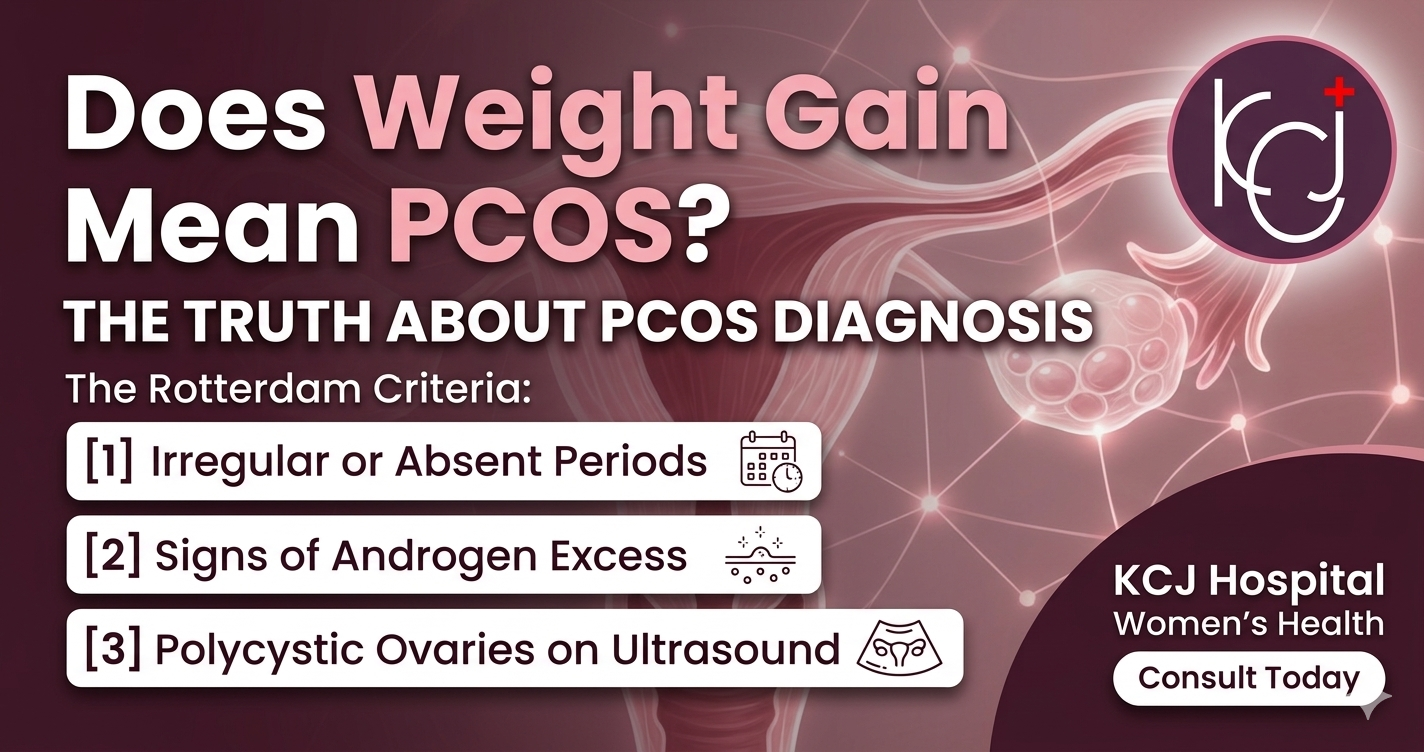
The truth is that weight gain is a symptom, not a definitive marker. To provide an accurate PCOS diagnosis, doctors worldwide rely on a specific medical standard known as the Rotterdam Criteria. By looking beyond the scale and focusing on clinical evidence, we can distinguish between general metabolic changes and true hormonal disorders.The Truth About PCOS Diagnosis Every Woman Should Know :
Weight gain does not always mean PCOS.
Many women today are told they might have PCOS just because they’ve gained weight. This has created confusion, fear and unnecessary stress.
But here’s the truth:
Obesity alone does NOT mean you have PCOS.
Polycystic Ovary Syndrome (PCOS) is a clinical condition diagnosed using specific criteria, not just a single symptom or ultrasound finding.
Doctors follow the Rotterdam Criteria, which require any 2 out of 3 features:
- Irregular or Absent Periods
• Infrequent cycles (<8 in a year)
• Skipped periods
• Difficulty in ovulation - Signs of Androgen Excess
• Acne
• Excess facial or body hair (hirsutism)
• Hair thinning or female-pattern baldness - Polycystic Ovaries on Ultrasound (PCOM)
Weight gain is NOT included in these criteria.
Why Weight Gain Alone is Misleading
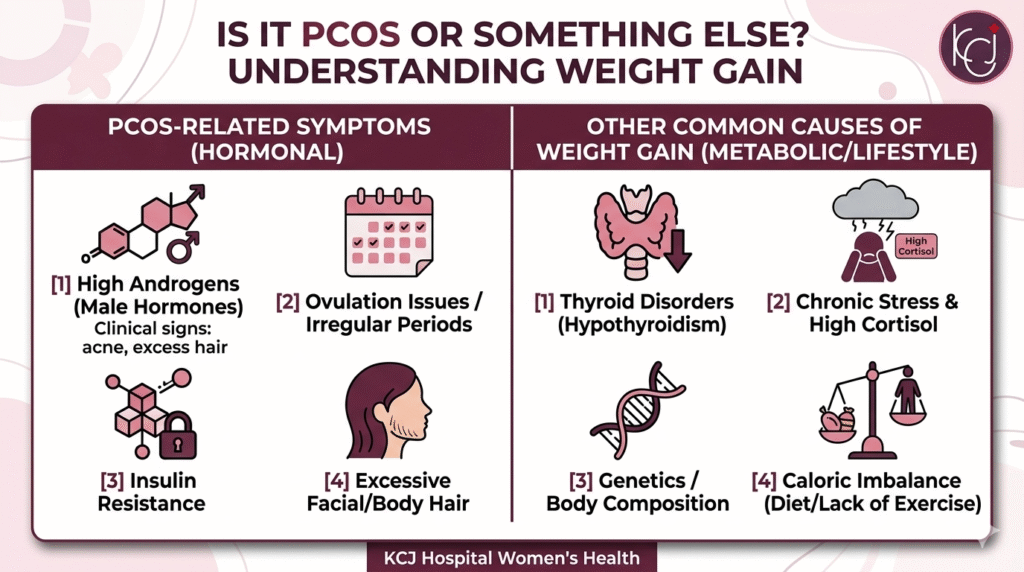
Weight gain can happen due to:
• Lifestyle factors
• Thyroid disorders
• Stress
• Genetics
Not every woman with obesity has PCOS, and not every woman with PCOS is obese.
The Problem of Overdiagnosis
Incorrectly labeling someone with PCOS can lead to:
• ❗ Anxiety and emotional distress
• ❗ Fear about fertility and future health
• ❗ Unnecessary medications and lifestyle restrictions
PCOS has different phenotypes, and lumping all women under one label reduces proper understanding and treatment.
PCOS is not just about periods or weight — it has long-term implications for:
• Metabolic health
• Fertility
• Mental well-being
That’s why timely and correct diagnosis is essential.
Final Takeaway
Don’t assume PCOS because of weight gain
Look at the full clinical picture
Get evaluated using proper criteria
Right diagnosis = Right treatment = Peace of mind